Pleasure Beach Blackpool has spent 130 years building a reputation for traditional seaside amusement park atmosphere, classic wooden roller coasters, the Big One and large-scale shows. Less discussed is the retail operation behind it, which head of retail Damian Jackson presents as a designed part of the visit rather than an obligatory gift shop at the exit.
Jackson oversees physical stores, e-commerce, ride photography and merchandise development, and works closely with Amanda Thompson from first concept through design brief, product development, sampling and final approval. His stated principle is that ranges are not built by applying a logo: every range needs a reason to exist, a defined customer and a genuine connection to the resort. The flagship shop sits at the main entrance in the Casino building, supported by outlets across the site.
One park, several customers
On a single day the park may serve first-time families, school groups with limited spending money, teenage friends and couples, international tourists, lifelong fans and serious coaster enthusiasts, and their reasons for buying differ. Families tend to want a traditional souvenir; enthusiasts want accurate collectables tied to a specific ride; teenagers respond to confectionery, accessories and trend-led clothing; heritage-minded visitors value nostalgia and craftsmanship. Jackson says sales data is combined with time spent in shops, staff conversations and guest feedback, because reports show what sells but not why.
The range is organised by customer mission and price level:
- Impulse purchases such as confectionery, magnets, keyrings and badges;
- Practical items including bottles, bags and ponchos;
- Fashion-led apparel and accessories;
- Children's products and plush;
- Premium and limited-edition pieces for enthusiasts and collectors.
Attraction-specific ranges sit alongside broader branding, licensed lines, playful products and heritage collections; Jackson argues this means a tightly edited range where each product has a purpose, a customer and an appropriate price, not unlimited choice.
Retail planned alongside the ride
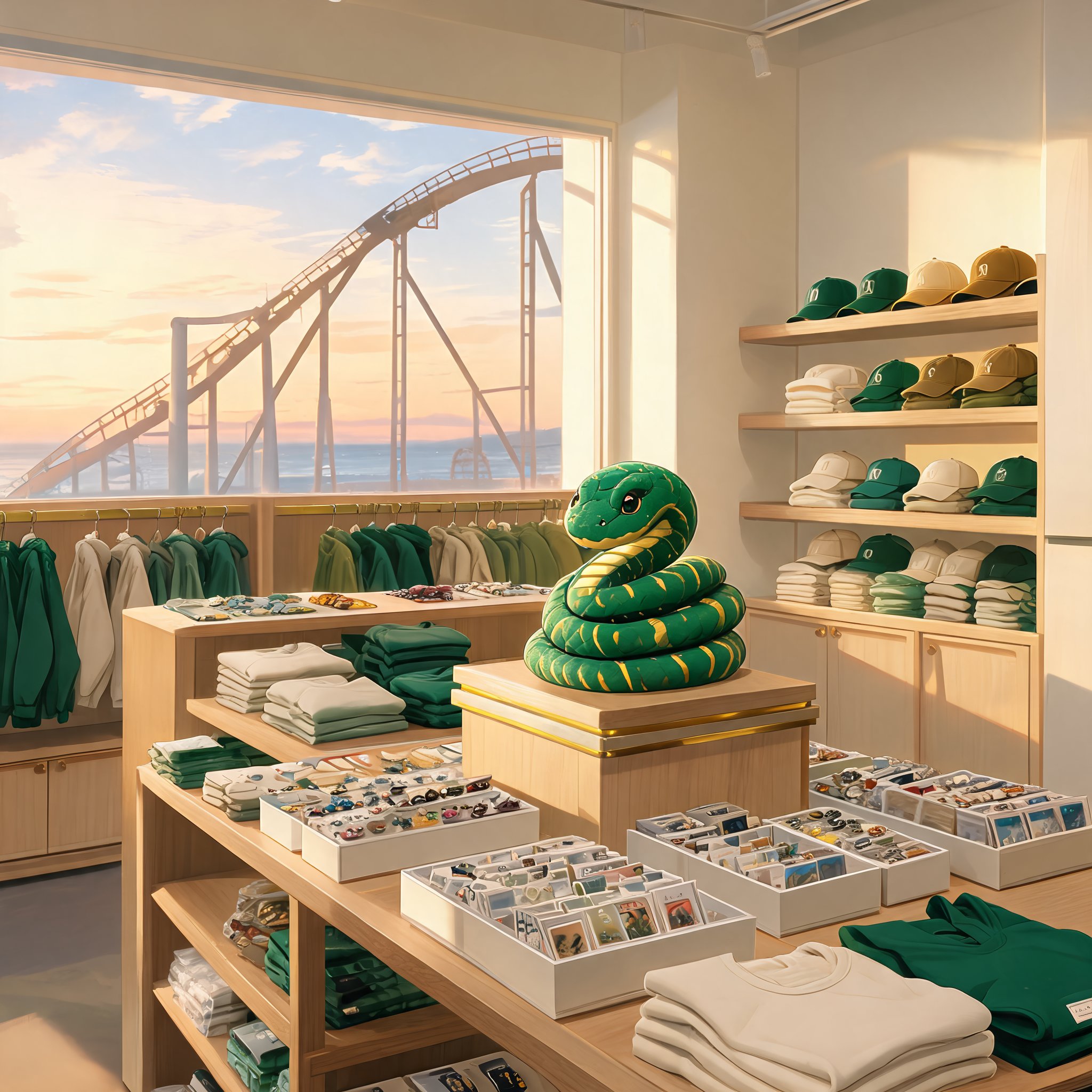
The Aviktas range is cited as the model: rather than a set of products carrying a ride logo, the collection was built around the attraction's visual world of a golden snake, emerald colouring, mythology and mystery, with retail involved from the start of the project. The park also found demand for premium collectables, selling out a run of 50 models priced at £250 each.
Approaches vary by attraction: ICON lends itself to a clean, contemporary, fashion-led treatment, while heritage rides such as the Big Dipper and Grand National draw on archive artwork, engineering detail and guest memories. Materials, colours, trims, embroidery, packaging and in-shop presentation are reviewed alongside intended customer, expected demand, price points, production quantities, lead times and sales locations.
Heritage, playfulness and licensed IP
The resort's archive of attraction imagery, typography, posters, architecture and stories is reinterpreted for modern apparel, homeware and collectables; Mr Funshine merchandise is cited as nostalgia with a contemporary twist, while humour, colour and character are used to reach children, families and casual visitors.
For licensed brands including Nickelodeon and Aardman's Wallace and Gromit, Jackson describes a partnership between the park, the IP owner and approved suppliers that follows brand guidelines and approvals while adapting characters to how they are experienced on site. Exclusivity, ride references, location detail and personalisation are used so the same product cannot be found at a general online retailer.
What guests now expect
Jackson reports growing demand for exclusive, authentic and considered products: attraction-specific merchandise, premium apparel, subtle branding, collectables, limited editions and items with a story, plus goods that can be worn or used away from the park. Generic souvenirs and heavily branded products without a story have become less compelling, though keyrings, magnets, mugs and confectionery remain important and must keep evolving in design and presentation.
Basics, suppliers and selling
Stock accuracy and availability are named as the least glamorous and most critical part of the operation, covering deliveries, stock movement, replenishment, pricing, signage and daily compliance checks. Suppliers are treated as creative and commercial partners rather than manufacturers, with quality, communication, lead times, compliance, pricing and consistency all counted as essential.
Spending is encouraged through a clear price architecture that lets guests enter a range at different levels, visible trade-up value, and product adjacencies such as outfits for plush characters or frames for ride photographs. Retail is planned into attractions and guest journeys through themed environments, demonstrations, characterful displays, confectionery experiences, personalisation, ride photography and interactive selling; the Big Big Bubble Shop is cited as shopping that is an activity rather than a transaction.
E-commerce extends the relationship year-round, letting enthusiasts follow launches, former visitors reconnect with memories and guests who cannot travel to Blackpool buy selected products, while providing demand insight that can differ from in-park behaviour. Staff act as hosts, storytellers and brand ambassadors, whether making candy floss, helping a child build a teddy, demonstrating bubbles or personalising a gift, and gift wrapping and personalised embroidery are offered for purchases meant to feel more significant or to be sent home.
Jackson takes inspiration from museums, heritage destinations, premium fashion brands, department stores and experiential retailers — archive interpretation, product drops, collaborations, presentation and scarcity — while insisting that inspiration is not imitation.