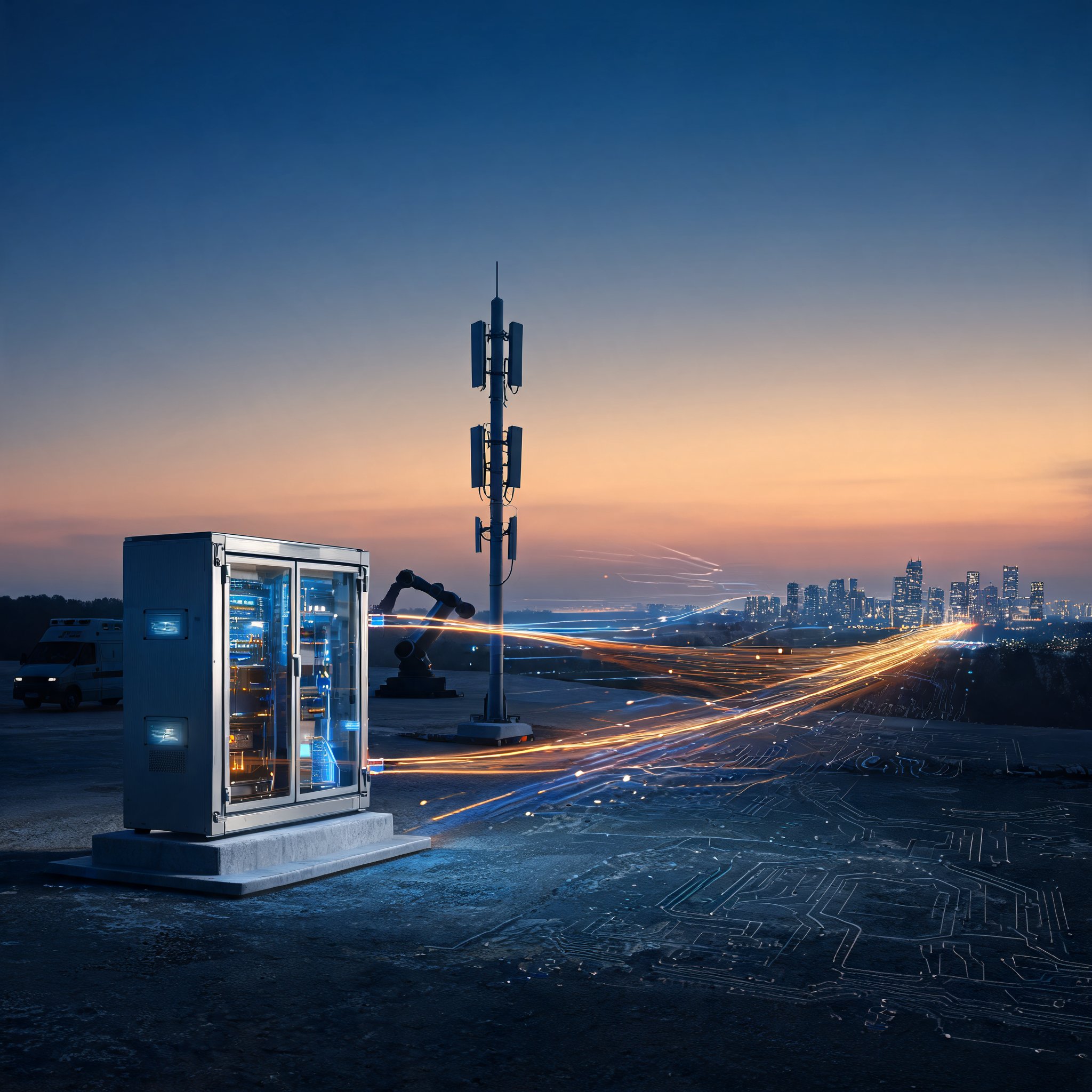
Nokia and NVIDIA are moving AI-RAN into operator trials, with a reference design that places accelerated computing and NVIDIA software inside the radio access network. Nokia is running anyRAN trials with BT, Deutsche Telekom, Elisa and Orange. Nine operators across Europe, the Middle East and Africa are now building or expanding NVIDIA-powered infrastructure, while nearly 20 operators have publicly announced AI-RAN collaborations built on Nokia's anyRAN software and NVIDIA's Aerial RAN Computer.
A reference design, not a single radio feature
The architecture combines Nokia's anyRAN software with the Aerial RAN Computer, CUDA, Nemotron open models and Agent Toolkit. Those elements are embedded in Nokia's Autonomous Networks Suite and in third-party operations software from Cisco, TCS and NTT DATA. Dell, QCT and Supermicro supply ARC-ready servers, and Red Hat OpenShift provides the cloud-native foundation. The stack is intended to shorten integration work by packaging radio software, accelerated compute and AI tooling into one reference design.
That packaging also defines the commercial boundary. Nokia's RAN software sits above NVIDIA's programming model, so operators adopting the full stack become tied to NVIDIA at the radio layer. The dependency widens when Cisco and Nokia fold Nemotron open models into autonomous-network software, extending NVIDIA's role from compute hardware into operations tooling. The integration benefit and the lock-in risk come from the same design choice.
Why operators are testing AI at the edge of the network
The engineering case rests on assets operators already control: land, power, shell space, spectrum and fibre. Adding accelerated compute at centralised, metro and cell sites allows them to serve AI models closer to the machinery, emergency responders and handsets that consume them. It also allows the radio itself to run inference, rather than treating AI as a separate layer in the core or cloud.
The disclosed performance data is limited but concrete. Lab measurements from Deutsche Telekom and Nokia put typical uplink throughput improvement for AI-based channel estimation at around 10 to 15 percent. That is a real gain, but a modest one relative to the cost of building distributed compute across many sites. The figure also applies to a specific function, not to the full workload mix operators are testing.
Backhaul becomes the constraining variable once inference moves outward. AI workloads at cell and metro sites need enough transport capacity to move data and model updates between locations. Nokia's 800G coherent pluggables offer an indication of the capacity the company expects operators to need between sites, though the announcement does not establish how widely those links would be deployed or who would pay for them.
Trials cover voice, vision and industrial AI
The operator work is broad enough to be described as a workload mix rather than a single radio feature. Elisa completed Europe's first AI-RAN field trial, running voice, mobile data and vision AI together on one accelerated platform over 5G. Orange is introducing voice intelligence services for enterprises and emergency responders. Deutsche Telekom is working on physical AI for industrial customers, and BT is preparing live trials in the UK.
Those use cases point to different commercial paths. Voice intelligence and emergency-response services could be sold as enterprise offerings; vision AI could support industrial monitoring or site operations; physical AI could connect robots and machinery to nearby compute. The common thread is that the radio network becomes a distribution point for inference, not just a pipe for connectivity. The announcement does not disclose pricing, customer commitments or service revenue for any of these trials.
Economics remain with the operator until AI services earn revenue
Until AI-service revenue materialises, operators carry the financing for distributed compute and backhaul. The suppliers of accelerated compute and RAN software hold the layer where incremental value would accumulate. That division matters because the 10 to 15 percent uplink improvement, on its own, is unlikely to justify a broad build-out. Operators will need either new service revenue or enough operational savings across multiple AI workloads to support the investment.
NVIDIA CEO Jensen Huang framed the shift as telecom networks moving from carrying conversations to carrying intelligence. He said leading operators are turning land, power and connectivity into distributed AI infrastructure, bringing intelligence closer to industries, people and robots. Nokia Chief Technology and AI Officer Pallavi Mahajan described the goal as a software-defined foundation that helps operators get more from spectrum today while enabling physical AI and a path toward autonomous, AI-native 6G. Those are vendor claims about direction, not evidence that the business model is already proven.
Checkpoints cluster in 2027
The disclosed commercial and technical checkpoints cluster in 2027. BT's Birmingham live trial is slated for then, alongside Deutsche Telekom's field trials and Elisa's distributed deployment with commercial AI-RAN services. That timetable leaves room for operators to test whether the reference design shortens integration and whether backhaul and compute costs can be recovered.
The near-term test is therefore not whether AI can run in a radio network. The trials already show that it can. The harder question is whether distributed AI-RAN can produce enough revenue, savings and operational simplicity to justify a multi-site build-out, and whether operators can capture that value while depending on NVIDIA's programming model at the radio layer.